C.J. Kok Jury Award for Best Thesis of the Year
From ultra-sharp microscopes to fairer statistics and hidden effects of microplastics - which PhD candidate has written the most impressive dissertation of 2025? Meet the nominees of the C.J. Kok award for the Thesis of the Year.

Guido Stam
Leiden Institute of Physics
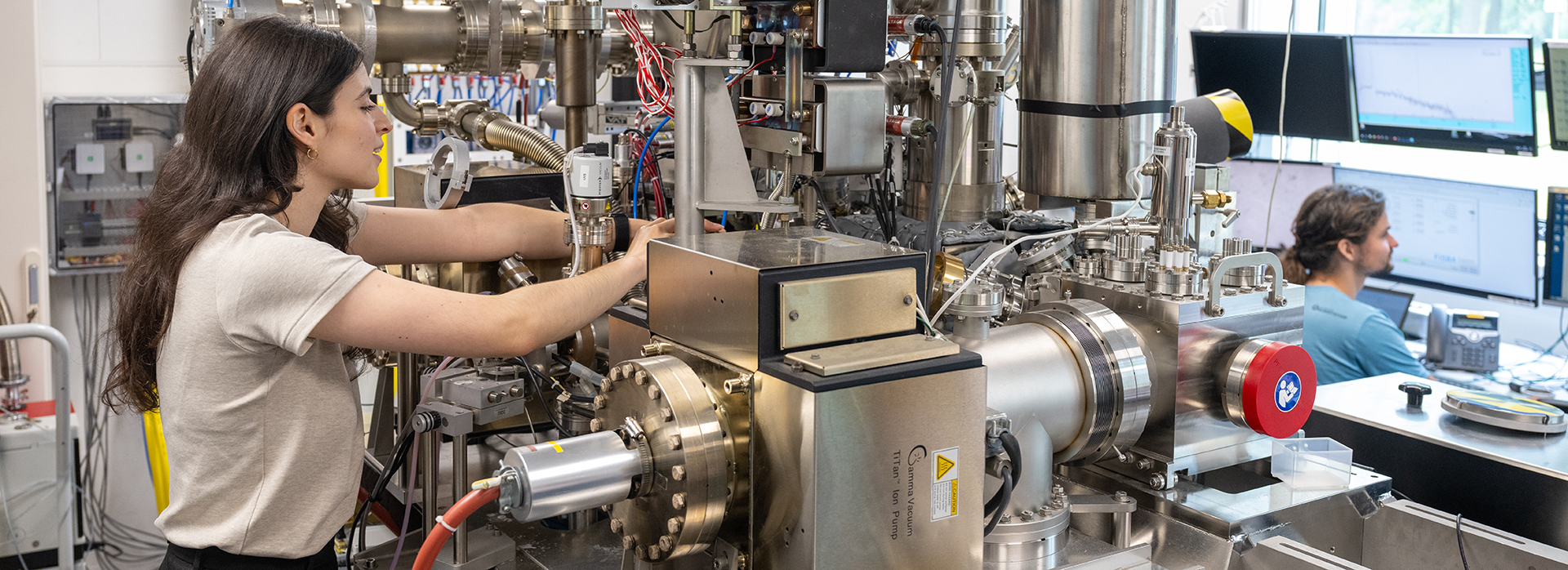
A microscope with incredible sharpness that leaves samples unharmed – Guido Stam helped develop one. He combined light and electrons to study biological samples.
‘We can now measure things that simply weren’t possible before.’
Read more about Stam’s research
James France
Institute Biology Leiden
An evolutionary ‘trap’ that has haunted crested and marbled newts for 25 million years: Leiden researchers have uncovered a mysterious DNA error that should not be able to arise – yet persists all the same. How is that possible? Biologist James France found new clues.
‘Evolution is like gravity: it just happens. Sometimes helpful, sometimes disastrous. These newts show how strangely those natural laws can play out.’
Read more about France’s research

Tyron Lardy
Mathematical Institute
Mathematician Tyron Lardy worked on a new approach to hypothesis testing. Instead of the traditional p-value, he uses so-called e-values. These turn out to be more flexible – especially when you want to look at your results midway through the study.
‘I set out to find how you can design a good e-value for complex problems — essentially, what recipe you should follow to end up with a meaningful number at the end of your experiment.’
Read more about Lardy’s research

Laura Zantis
Institute of Environmental Sciences
Micro- and nanoplastics cause stress to crops such as lettuce and carrots, Laura Julia Zantis found. This can lead to reduced growth and a lower nutritional value. Biodegradable plastics have this effect too, likely because of chemicals they release during degradation.
‘The reduced nutrional value of affected crops could ultimately impact consumers.’
Read more about Zantis’ research

Diederick Vermetten
Leiden Institute of Advanced Computer Sciences
Algorithms solve problems. But which algorithm is best suited to which problem? Diederick Vermetten developed methods to figure this out. And that is important for the entire field.
‘The beauty of research, to me, is being guided by the wish to explore the unknown.’
Read more about Vermetten’s research.
Maria Gorostiola González
Leiden Academic Centre for Drug Research
Cancer research generates massive amounts of data, but traditional tools often fail to fully harness their potential. How can we unlock this data to provide better treatments for cancer patients? Marina Gorostiola González explored this by using advanced data analysis techniques to guide drug discovery.
‘Computational tools allow us to analyse data in ways we couldn’t before, uncovering insights we might never even have considered.’
Read more about Gorostiola González’s research

Daan van der Vliet
Leiden Institute of Chemistry
How do fats and enzymes in the brain contribute to multiple sclerosis? Daan van der Vliet combined chemistry and neuroscience to gain new insights into how brain disorders develop.
‘The brain is pure chemistry. To truly understand it, we must understand the chemistry. And every medicine that exists, or will be designed in the future, is chemistry.’
Read more about Van der Vliet’s research.

Julia Santos
Leiden Observatory
How do atoms and molecules end up forming planets? That's what astrochemist Julia Santos studied. She discovered the dominant process behind the formation of methanol in space – a finding that surprised the entire field.
‘I try to understand how the ingredients for planets are distributed in the universe. Was Earth just lucky?’