
Research programme
Microbial Sciences
In the research programme Microbial Sciences we perform state-of-the-art research in the field of biotechnology and microbial sciences.
- Contact
- Gilles van Wezel
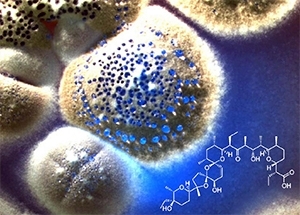
In Microbial Sciences, we perform multidisciplinary research to understand the structure and function of microbes at all levels of biological organization, from small molecules and cellular structures at atomic resolution to multicellular communities.
We investigate how microbes sense and respond to their environment and interact with other organisms, and harness Nature's Biodiversity to discover novel bioactive molecules and enzymes, which find application in the clinical trajectory and in biotechnology.
Microbial Sciences contributes to the IBL research themes in the following ways:
Bioactive molecules
Discover new bioactive molecules and enzymes and unravel their mechanisms of action, regulatory networks, and the (bio)synthetic pathways required for their production.
Development & Disease
Unravel the processes that control cellular morphogenesis, growth, development and virulence, and visualise cellular structures and components from cellular level to atomic detail.
Evolution & Biodiversity
Understand how diversity and evolution are influenced by cooperative and antagonistic interactions taking place between microbes.
Host-Microbe Interactions
Dissect how microorganisms and microbial communities interact with eukaryotic hosts and how these insights may be harnessed to improve the health of the host.
Related research
-
Microbial Sciences
- Microbial Chemotaxis
- Regulatory networks in Streptomyces
- Functions of autophagy in the filamentous fungus Aspergillus niger
- The improvement of minute enzyme factories
- Novel approaches to develop filamentous micro-organisms for enzyme production (FILAZYME)
- Cryo-EM of cholera infection
- Efficient targeting of the Trichoderma genome for industrial protein engineering
- Plant-microbe interactions
- Anticancer compounds from actinomycetes
- Improving the filamentous fungus Aspergillus niger as cell factory for starch degrading enzymes
- Heterogeneity in spores of food spoilage fungi
- Cell architecture and pathways for parallel secretion in the filamentous fungus Aspergillus niger
- Functions of autophagy in the filamentous fungus Aspergillus niger
- Regulation of enzyme production in fungal cell factories
- Cell Wall Dynamics in Aspergillus niger
- Fungal Chitosans from Fermentation Mycelia for Plant Biostimulants (FunChi)
- Horizontal gene transfer and spreading of biosynthetic gene clusters and antimicrobial resistance
- Harnessing the soil microbiome for improved stress tolerance in crop plants
- Less is more: reduced mycelial heterogeneity for improved production of enzymes and antibiotics
- Quest for new antibiotics