
International Women’s Day: four women on pride, leadership and impact
International Women's Day
On 8 March it’s International Women’s Day. We spoke to four women from our faculty about what they are proud of, their personal journeys and social change. Their honest stories highlight just how diverse womanhood can be.

Independence
Her independence. That is what Katarina Stankovic (ICT & FLO staff member) is most proud of. ‘I am the first woman in my family to have completed a Master’s degree, despite my mother and grandmother telling me I had studied “enough”. I can honestly say that being a woman is not always easy, let alone being a mother.
Since the birth of my first child, I have reflected much more on what I want to achieve in the future and how much time I realistically have. I chose to preserve a healthy work–life balance by reducing my working hours and spending more time with my child. Although this has financial implications, I see my new role as a mother as a valuable and meaningful addition to my life.’
Yoga and leadership
Mirjam van den Brand is institute manager at Leiden University College, yoga teacher, and the mother of three sons and four bonus children. ‘My approach to leadership is firm on substance and gentle in relationships. Whether that is inherently “feminine”, I’m not sure, but I do know that my sensitivity to relationships, communication and team dynamics strengthens my leadership.

Through yoga, I support both women and men in feeling mentally and physically stronger. Helping people find a sense of stability, literally and figuratively, also connects to womanhood for me: taking up space, building strength and remaining compassionate at the same time.’
‘Being a woman has made me even more aware of the importance of inclusivity. I pay close attention to who is at the table, and who is not. I actively try to create space for different voices. This applies both to my role as a manager and to my work in the yoga studio.’
‘I try to lead by example for my children, showing them how to make the world around them a better place – by treating others with respect, curiosity and a sense of equality. I want them to understand that differences are welcome, but that we are fundamentally equal.’
Choosing your own path
Maarja Beerkens (Vice Dean FGGA) was always encouraged, both at home and at school, to follow her own path. ‘If I can contribute in even a small way to making it normal for women to be present at boardroom tables and for female leaders to be allowed to make mistakes - not because they are women but because everyone does – then I am happy. On International Women’s Day, I feel a deep sense of pride and gratitude towards the women who have fought for equal rights and responsibilities over the past century and beyond.’
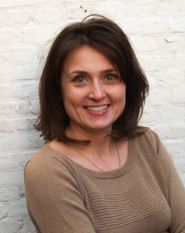
‘No one is just one thing (a woman, Gen X, Gen Z, neurodivergent). Many advantages and disadvantages in life are invisible, let alone easily articulated. My dream is of an academic community where we no longer need to separate people into categories, and where we create a working environment in which everyone can contribute to their full potential without first having to be labelled. A community where we work together on something larger than ourselves: advancing the boundaries of knowledge.’
Women as role models
Shana Hepping (PhD candidate, Institute of Public Administration) is proud that she can present herself confidently and authentically in an environment that remains largely male-dominated, without feeling the need to adjust her womanhood.
‘One example is staying overnight in mountain huts ahead of challenging alpine expeditions, where around 95 per cent of the other guests are men. In those moments, I think to myself: I’m doing this too!'

'More recently, a student told me how pleased she was to see me there, a female PhD candidate among male lecturers. That made me realise that my contribution goes beyond research and teaching alone. I can also be a role model for students who want to see themselves reflected in the person standing at the front of the classroom, and hopefully draw inspiration from that.’
Societal impact
To conclude, we asked all four women what role they believe women play in driving social change:
Katarina: ‘An equal role to that of anyone else. I believe it is important for women to keep feminism alive in society, because undermining it or ignoring it does nothing to move women forward.’
Mirjam: ‘An essential one. Not because women are inherently “better” or “softer”, but because a diversity of perspectives makes social systems stronger and fairer.’
Maarja: ‘When the other half of the population is fully involved in social and economic life, everyone benefits. We gain a broader pool of talent, more ideas and skills, a stronger safety net and, quite simply, greater engagement.’
Shana: ‘I often see women as key drivers – or co-drivers – of change, particularly at a local or everyday level. In my own surroundings, I notice that when women are given space to raise their voices, it sets things in motion. This aligns with feminist thinkers, who argue that the position of women is an important indicator of how well a society functions.’