Maia Casna breaks new ground as Faculty of Archaeology’s first female PhD to graduate cum laude
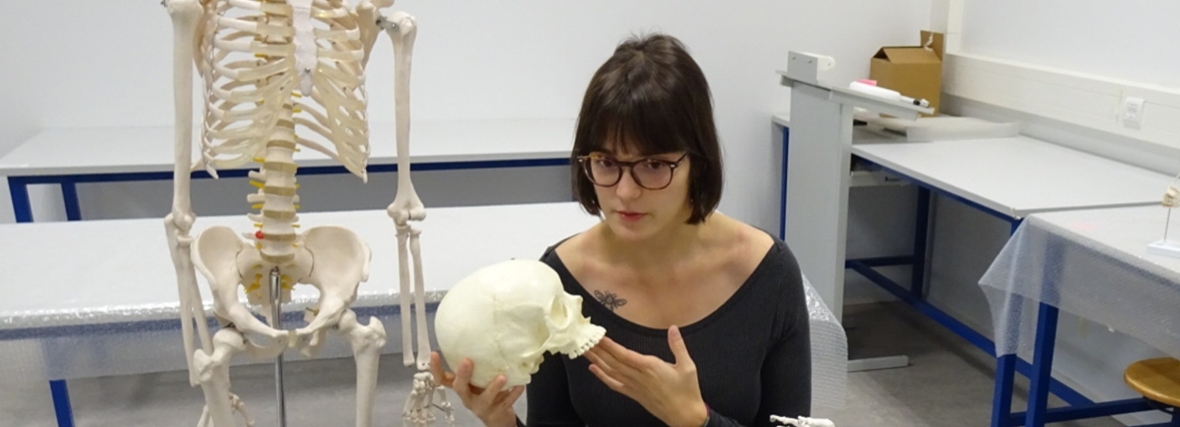
On 17 June 2025 the Great Auditorium of Leiden University erupted in applause as Maia Casna received her doctorate cum laude; the highest distinction Leiden University can bestow a graduating PhD candidate. Casna’s achievement is historic: she is the first woman in the Faculty’s 27 year history to earn the honour.
Conflicted
‘I feel conflicted,’ Casna admits straight away. ‘Of course I am very happy that I was awarded cum laude. It is especially rewarding coming from a migration background. I’m born in Italy, then moved to Iceland and later to the Netherlands for my master’s. To see how far I have come is truly satisfying.’
Yet pride is tempered by surprise that it took until 2025 for such a milestone to be reached. ‘It’s weird that it took to 2025 to have a female PhD with cum laude,’ she reflects. ‘We haven’t done great in the past, but now there is change. That’s a good sign.’
Casna points to recent studies highlighting gender disparities in doctoral recognition. ‘An article in Nature showed that female PhDs are still awarded unequally. For me it’s nice because I opened a door. I hope many others will follow.’

A better place
The assessment committee cited both academic excellence and community service. Casna’s dissertation, which examines respiratory diseases hundreds of years before COVID‑19, produced many articles in top‑tier journals. ‘I think I have published more papers than was expected of me,’ she says with a smile. ‘But it wasn’t just the research. I taught, had a seat on the Diversity Committee, and spent a year as editor‑in‑chief of Inter‑Section. My mantra is that you need to leave a place better than how you found it.’

Breathe
Casna’s contract runs for a few more months, giving her rare breathing space. ‘Many PhDs defend and then they’re done in Leiden. I’m glad, and very privileged, to have time to wrap up side‑projects, finish publications and simply enjoy my colleagues and facilities without thinking about the defence all the time.’
The respite will be short‑lived. ‘I’m shopping around for a postdoc,’ she explains. ‘The market is tight, but I’m positive. I’ve had a couple of interviews and several grant applications are in the pipeline.’
Planting a seed
Casna is quick to credit her supervisors and lab mates for an environment that allowed her to thrive. ‘Doing a PhD is very alienating work. You sit for a very long time with your own emotions and limits. There’s no way around it. But a good safety net really helps. You plant a seed; depending on the soil, it will be a beautiful, thriving plan. Or not. Even on hard days, coming to the Faculty and seeing my colleagues energised me.’
That positive experience, Casna believes, should become the norm rather than the exception. ‘I talk with many other graduated PhDs who feel exhausted, who don’t even want to look at their dissertation because of trauma. I really strive for everyone to have the kind of supportive environment I had.’
Advice
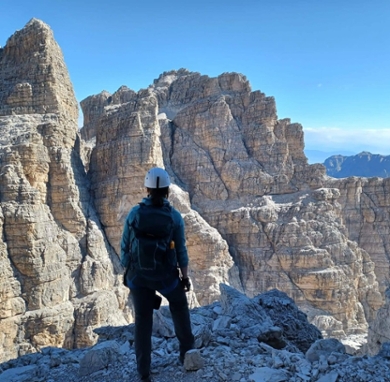
Asked for one piece of guidance, Casna recounts a memory. ‘When I was in middle school, I had very big plans. A teacher told my dad I should learn to keep my feet on the ground. My advice is: don’t keep your feet on the ground. If you really want to reach something, you have to go for it.’
Ambition alone, however, is not enough. ‘You need a good network, good supervisors, good colleagues,’ she stresses. ‘Let people help you get where you want to go. And, importantly, you have to let this help in.’
Shifting culture
Casna sees her cum laude not as a personal finish line but as a signal that the Faculty’s culture is shifting. ‘Academic culture is willing to change. Change is good. There will be many more firsts. Let’s go in that direction!’
For now she allows herself a moment of satisfaction. Then it is back to the lab, the grant proposals, and the search for the next postdoctoral challenge. If her track record is any guide, Maia Casna’s journey is only getting started, and the doors she has opened will stay open for those who come after her.