

The unexpected role of IL-27 in atherosclerosis
One of the pleasant aspects of research is that unexpected things sometimes turn up on the periphery of the research. During her master's internship, Ornélia Ramos conducted research into the role of the protein IL-17 in hardening of the arteries. At the same time, she also carried out some additional work on IL-27. But it was this protein that gave some surprising results. Ramos has been awarded a Mosaic subsidy to conduct PhD research into IL-27.
Inflammation
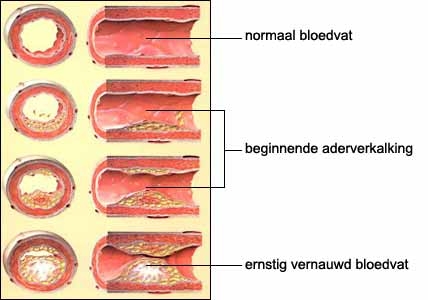
Atherosclerosis is caused by fatty deposits accumulating in an blood vessel and causing it to become blocked. 'As a result of these fatty deposits, the artery wall becomes inflamed; to date, little is known about this inflammation,' Ramos explains. Just as with other infections, an important role in this process is played by T-cells. These are cells produced by the immune system that can either stimulate or inhibit an infection, depending on the signals they receive from the environment. Ramos is carrying out research into the protein interleucin-27 (IL-27): 'This protein is produced when the artery wall becomes inflamed, and it can affect the action of T-cells. It is still unclear whether IL-27 causes the T-cells to inhibit or to stimulate the inflammation. This is what I am investigating." Ramos will be looking at the effect of IL-27 on hardening of the arteries: whether it exacerbates or improves the condition. This research is particularly relevant as it might be possible to use medicines that influence IL-27 for the prevention and treatment of atherosclerosis.
Sideline
Ramos became involved in the research into IL-27 by chance: 'The first stage of my master's training was in the Biopharmacy department, where I am now carrying out my PhD research. At that time I was researching a different protein involved in inflammation: IL-17. IL-27 was a kind of sideline to give me continuity in my work - in this field of research you have to spend a lot of time waiting for things, such as for a culture to develop. And then we discovered in mouse trials that blocking IL-27 can double the degree of atherosclerosis. This was completely unexpected. To enable me to continue the study, I followed the advice of the head of our group, John Kuiper, and applied for a Mosaic subsidy.
Lots of ideas
Mosaic grants are subsidies from NWO intended for PhD researchers from minority groups, who are somehow or other underrepresented in the regular distribution of subsidies. Twenty grants are available each year. Without this grant, Ramos would probably not have gone on to do PhD research: 'I considered going to work in a company. However, I'm now very pleased to be able to carry on with my research because after my internship I came up with a lot of different ideas for my study. I can now develop these ideas further. It's also a great advantage to be able to attend exhibitions and conferences while working for my PhD; it will give me the opportunity to meet other researchers involved in similar fields.'
(11 August 2009/Leonie Hussaarts)