Summer holiday tips from BAIS lecturers
End of the semester! Afraid to get bored of all the sun bathing and cocktail sipping ahead of you? With these Summer holiday tips from your lecturers you will have plenty of material to keep your brains busy, from a Nepalese coming of age novel to a history podcast on revolutions and from books on banking to an Aztec exhibition in Leiden.
Exhibitions
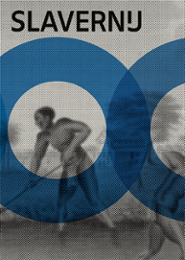
Slavery exhibition at the Rijksmuseum
Recommended by Anne Marieke van der Wal (History: Africa) and Marina Terkourafi (Culture and Language: Europe)
The Rijksmuseum in Amsterdam is hosting a ground breaking exhibition on slavery this Summer. Tying together four continents, the exhibition offers insight into the darker sides of Dutch history, thus breaking with the museum's tradition as a show piece of a national pride. This fits within larger societal discussions about national heritage and decolonization. The exhibition brings to the public not only new objects, but also innovative presentation techniques.
Students visiting this exhibition are invited to cowrite a blog about it for the brand new International Studies Blog we are launching after Summer. Please send an email to blogthisisinternationalstudies@hum.leidenuniv.nl for further instructions.
Aztec exhibition at the Museum Volkenkunde
Recommended by Andy Ciofalu (Global History, Cultural Studies, Comparative Politics, International Relations)
The Netherlands was invaded by the Spanish empire not long after the Spanish invaded and decimated many Aztec capital cities. But more than one million people still speak the Aztec Indigenous language -Nahuatl. We now know much more about the daily lives of the Aztecs including what food they ate, how they were educated, and what they did to be resilient. The exhibit showcases the latest knowledge about the Aztec, but also contains a large number of intriguing artifacts, some of them on display outside Mexico for the very first time. Opening August 6.
Podcasts
What up Holmes?
Recommended by Judith Naeff (Culture and Language: Middle East, Social Criticism in the 21st Century)
Where is the limit to free speech? How does misinformation relate to free speech? And what does an ideal “marketplace of ideas” look like in real life? These are not new but more urgent than ever. This podcast goes back to an episode of US history that introduced current understandings of freedom of speech and discusses how a public sphere shaped by social media poses new challenges.
Revolutions podcast
Recommended by Adrian Rogstad (Economy Russia/Eurasia, Russian in Practice, Research Methods: Discourse and International Relations)
Host Mike Duncan is currently working his way through a (very) in-depth account of the Russian Revolution (he’s on episode 56 and WWI has just started…). Despite its length, the podcast is very good at giving an accessible account of the history behind the revolution from both a Russian, international and intellectual perspective – there’s plenty on both tsars, geopolitics and socialist thought. And if Russia’s not your thing, there’s a back catalogue of seasons on the Haitian, Mexican, American, English, Bolivarian, 1848 and multiple French revolutions. Enough to keep you busy well past the summer!
Our Fake History
Recommended by Gina van Ling (History: East Asia, Politics: East Asia, Global History)
Our Fake History is an entertaining and informative podcast "about myths people think are history and history that might be hidden in myths". Did Zheng He really discover America in 1421 as Gavin Menzies claims in his bestseller of the same name? Was Mansa Musa of Mali (c. 1280 – c. 1337) the richest man who ever lived? Did the 1683 Siege of Vienna really decide the fate of European civilization? The podcast presents a wide variety of topics from all over the world and tackles topics with good research and storytelling.
Sacred Footsteps
Recommended by Eftychia Mylona (History: Middle East, Economy: Middle East)
Sacred Footsteps is dedicated to travel, history and culture from a Muslim perspective. We talk to writers, historians, artists and others, about travel as a spiritual practice, and discuss aspects of Muslim culture and history that are often overlooked.
Films
Citizen Hong Kong (Ruby Yang, 1999)
Recommended by Gina van Ling (History: East Asia, Politics: East Asia, Global History)
This is an old documentary but still very relevant today, considering the events unfolding in Hong Kong over the past few years. From Ruby Yang's website: "Last jewel in Britain’s imperial crown, Hong Kong apprehensively re-joined China in 1997. Ruby Yang went back to her childhood home to see how it would reconcile its British past with a Chinese future. Hong Kong stands both to lose and gain by shedding its colonial status. Hong Kong is a city of constant comings and goings, a world of borrowed traditions where both abject failure and wild success lurk just around the corner. Citizen Hong Kong is an engaging portrait of ordinary people coping with circumstances beyond their control."
The documentary is available through Leiden's Digital Library.
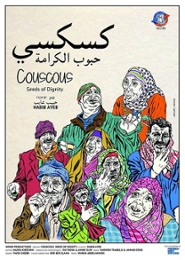
Couscous: Seeds of Dignity (Habib Ayeb, 2019)
Recommended by Judith Naeff (Culture and Language: Middle East, Social Criticism in the 21st Century)
Recently, we co-organized an online event on food politics in the Middle East and North Africa with the Leiden University Centre for Islam and Society (LUCIS). One of our speakers was Habib Ayeb of the Observatory of Food Sovereignty and Environment (OSAE) in Tunisia. In his documentary Couscous: Seeds of Dignity small farmers speak about food culture, autonomy and dignity in the face of agro-industrial multinationals. Available on YouTube.
Books – literature
“The Wayward Daughter: A Kathmandu Story” by Shradha Ghale
Recommended by Radhika Gupta (Politics: South and South-East Asia, Culture and Language: South and South-East Asia)
A novel about a young girl’s aspirations, middle class life and a portrait of Kathmandu against the political backdrop of a looming civil war - a great way to learn about Nepal and connect with the struggles and dreams of young people in other parts of the world.
“The Shadow Lines” by Amitav Ghosh
Recommended by Radhika Gupta (Politics: South and South-East Asia, Culture and Language: South and South-East Asia)
This is a classic on the themes of borders, migration, home and kinship. Traversing Calcutta, London and Dhaka and it offers a meditation on memory.
Books - Travel writing
Recommended by Helen Steele (History: Europe & Global History)
I’ve been re-reading some of my favourite travel writing in an attempt to compensate for thwarted travel plans this summer. Sybille Bedford’s Pleasures and Landscapes or Patrick Leigh Fermor’s trilogy (start with A Time of Gifts) allow you to escape and immerse yourself in European adventures stretching back to the 1930s.
“Girl, Woman, Other” by Bernadine Evaristo
Recommended by Eftychia Mylona (History: Middle East, Economy: Middle East)
Girl, Woman, Other follows the lives and struggles of twelve very different characters. Mostly women, black and British, they tell the stories of their families, friends and lovers, across the country and through the years.
“Merciless Gods” by Christos Tsiolkas
Recommended by Eftychia Mylona (History: Middle East, Economy: Middle East)
A collection of thrilling, original and imaginative stories that takes you deep into worlds both strange and familiar, and characters that will never let you go.
Books – history, culture, language
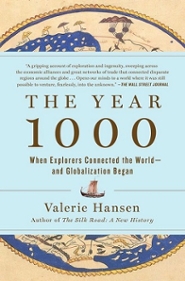
“The Year 1000” by Valerie Hansen
Recommended by Gina van Ling (History: East Asia, Politics: East Asia, Global History)
By focusing on archaeology and smaller events that occurred in the year 1000, Hansen argues that the roots of our contemporary globalised world lie centuries earlier than commonly thought. The book is well-written and a compelling read for your summer reading list.
“The Chile Pepper in China: A Cultural Biography” by Brian R. Dott
Recommended by Gina van Ling (History: East Asia, Politics: East Asia, Global History)
The chili pepper is a seemingly small American import that has had a great impact on China's identity and politics. Many Chinese cuisines are unimaginable without the heat of chili peppers. Chairman Mao attributed the Hunanese people's revolutionary spirit (Mao's home province) to their spicy dishes. Dott's book combines historical, sociological, and political research with food writing. If you want to read something a little different and try out some new Chinese recipes, then definitely pick up this book!
“How you say it” Katherine Kinzler
Recommended by Marina Terkourafi, (Culture and Language: Europe)
How You Say It: Why You Talk the Way You Do—and What It Says About You is a groundbreaking examination of how speech causes some of our deepest social divides—and how it can help us overcome them. This is on my Summer reading list.
“A kick in the belly” by Stella Dadzie
Recommended by Elisa Da Vià (Principles of Economics (PE), Foundations of Political Economy (FPE), Economy: Africa, Political Economy of Ecological Crisis)
In this riveting work of historical reclamation, Stella Dadzie recovers the lives of women who played a vital role in developing a culture of slave resistance across the Caribbean.
Dadzie follows a savage trail from Elmina Castle in Ghana and the horrors of the Middle Passage, as slaves were transported across the Atlantic, to the sugar plantations of Jamaica and beyond. She reveals women who were central to slave rebellions and liberation. There are African queens, such as Amina, who led a 20,000-strong army. There is Mary Prince, sold at twelve years old, never to see her sisters or mother again. Asante Nanny the Maroon, the legendary obeah sorceress, who guided the rebel forces in the Blue Mountains during the First Maroon War.
“The Immigrant War: A Global Movement Against Discrimination and Exploitation” by Vittorio Longhi
Recommended by Elisa Da Vià (Principles of Economics (PE), Foundations of Political Economy (FPE), Economy: Africa, Political Economy of Ecological Crisis)
In this original, accessible book, Vittorio Longhi, a journalist who specialises in international labour matters, describes an emerging phenomenon of social conflict, in which migrants are not conceived as passive victims of exploitation. Instead they are portrayed as conscious, vital social actors who are determined to organise and claim better rights.
“The Immortal Life of Henrietta Lacks” by Rebecca Skloot
Recommended by Elisa Da Vià (Principles of Economics (PE), Foundations of Political Economy (FPE), Economy: Africa, Political Economy of Ecological Crisis)
The Immortal Life of Henrietta Lacks tells a riveting story of the collision between ethics, race, and medicine; of scientific discovery and faith healing; and of a daughter consumed with questions about the mother she never knew. It’s a story inextricably connected to the dark history of experimentation on African Americans, the birth of bioethics, and the legal battles over whether we control the stuff we’re made of.
Books – political economy
Money and banking
Recommended by Marat Markert, Economy: Europe, Politics: Europe, Foundations of political economy, Global political economy.
“The end of banking” by Jonathan MacMillan
“Where does money come from?” by Josh Ryan-Collins et al.
“The banker’s new clothes” by Admati and Hellwig
“Leverage ratios”, “liquidity constraints”, “credit crunch”, “money market funds breaking the buck”, “shadow banking”, “repos”... There is nothing more off-putting than finance and banking jargon. Yet, money is at the center of our economic system - and this system is transforming at a breathtaking speed with cryptocurrencies proliferating and blockchain technology more generally. At the same time, there are many misconceptions about what money actually is and what banks actually do. If you want to understand how banks create money “out of thin air”, why in principle that is ok, but periodically leads to instability and crises, and what can be done about this. These are some books suggestions that provide an accessible introduction to money and banking, monetary policy, shadow banking and more.
“A Feminist Reading of Debt” by Lucí Cavallero and Verónica Gago
Recommended by Elisa Da Vià (Principles of Economics (PE), Foundations of Political Economy (FPE), Economy: Africa, Political Economy of Ecological Crisis)
Exploring the link between financial activity and the rise of conservative forces in Latin America, the book demonstrates that debt is intimately linked to gendered violence and patriarchal notions of the family. Yet, rather than seeing these forces as insurmountable, the authors also show ways in which debt can be resisted, drawing on concrete experiences and practices from Latin America and around the world.
“Talking to my Daughter About the Economy” by Yanis Varoufakis
Recommended by Elisa Da Vià (Principles of Economics (PE), Foundations of Political Economy (FPE), Economy: Africa, Political Economy of Ecological Crisis)
This book came out of the author’s belief about the economy being too important to leave it to the economists. He wanted to explain the seemingly difficult concepts in economics in a language that the young would easily understand. The tone of the book is conversational. He has written it as if he was actually having a conversation with his daughter Xenia about the economy and answering her very basic question ‘Why is there so much inequality?’
Under a White Sky, by Elizabeth Kolbert
Recommended by Elisa Da Vià (Principles of Economics (PE), Foundations of Political Economy (FPE), Economy: Africa, Political Economy of Ecological Crisis)
A damning overview, drawing on skillful and subtle reporting, that tracks the spiraling absurdity of human attempts to control nature with technology.
Books - Spy novels and detectives
Recommended by Bart van der Steen
“I wish you a James Bond summer holiday!”, a colleague once told me as I was just about to leave the office for a well-deserved vacation. At the time, I believed that he wished me a good holiday, with lots of exotic locations, cocktails and adventure. But perhaps I was too naïve at the time. Had he wanted me to have a vacation full of life-threatening car chases, shoot-outs and other forms of danger?
Still, it is true. My favorite summer holiday amounts to not much more than lying on a beach and reading spy novels. Or – even better: reading about spy novels. With that in mind, I am happy to share a number of gems from the university library.
First, there is of course The James Bond Dossier (1965) by Martin Amis. Published less than a year after the death of Bond’s creator Ian Fleming, Amis’s work is the first to seriously analyze the Bond novels, their structure and motives. The work becomes even more interesting when you realize that Amis was also the first to write a Bond novel after Fleming. Colonel Sun (1966) may be one of the best Bond novels written after Fleming’s passing.
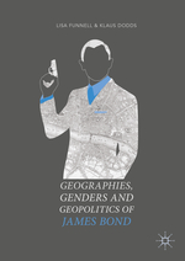
In recent times, the library’s collection of works that analyze the Bond novels and films has grown substantially. By now, there is almost no aspect of the franchise that is left un-analyzed. So, we provide access to books that analyze the cultural politics of the genre, or Bond’s gadgets and technology, the geopolitical musings and obsessions of Bond writers and directors, or – hard for anyone to miss – the gender politics of James Bond.
If detectives are more up your alley, then there is of course the fantastic work by late Marxist economist Ernest Mandel: Delightful Murder (1984). In this social history of the crime novel, Mandel traces back the format to the late eighteenth century and analyses it for what it really is: a reflection of how the upper and middle classes think about crime, criminals and other phenomena that threaten to uproot their society. Fun fact: Mandel wrote this work while he was on holiday!